Call us to schedule your appointment: +1 855-659-7311

In functional medicine, we ask what is activating the immune system, what is keeping the inflammation going, and what systems in the body are under strain. Instead of focusing only on symptom suppression, we look for patterns that may explain why the immune system has become dysregulated.
This approach matters because autoimmune disease is rarely caused by one thing alone. Gut imbalance, nutrient depletion, chronic stress, hidden infections, toxin exposure, and hormonal disruption can all influence immune function. By investigating these layers carefully, Dr Singh and Dr Sanna Singh help patients move toward a clearer understanding of what their bodies need.
At The Functional MDs, we commonly work with patients who have complex autoimmune concerns. These conditions often involve overlapping symptoms and require a detailed clinical picture, not a one-size-fits-all plan. Here are six autoimmune diseases we frequently help evaluate and support:
Hashimoto’s is an autoimmune condition in which the immune system attacks the thyroid gland. Many patients experience fatigue, weight changes, brain fog, constipation, hair thinning, and temperature sensitivity. Functional care looks beyond thyroid labs alone to assess gut health, nutrient status, inflammation, and immune triggers that may be contributing to ongoing symptoms.
Rheumatoid arthritis can affect more than joints, often causing pain, stiffness, swelling, and fatigue that interfere with daily life. We evaluate inflammatory burden, gut integrity, metabolic stress, and environmental exposures that may influence immune activity. The goal is to support the body in a way that addresses both symptoms and underlying drivers.
Lupus is a systemic autoimmune disease that can affect the skin, joints, kidneys, blood cells, and other organs. Because symptoms can fluctuate, patients often need a careful and individualized evaluation. Functional medicine may explore immune triggers, toxin load, stress patterns, and nutrient depletion to better understand what is amplifying disease activity.
Multiple sclerosis involves immune-mediated inflammation that affects the nervous system. Patients may experience numbness, weakness, vision changes, fatigue, or balance concerns. We look at inflammatory markers, metabolic health, gut factors, and possible infectious or environmental contributors that may influence neurologic stress.
Psoriasis and psoriatic arthritis are immune-mediated conditions that can affect both the skin and the joints. These conditions often have strong inflammatory and gut-health connections. Our approach considers digestion, nutrient deficiencies, stress physiology, and immune triggers that may worsen flares or slow recovery.
Inflammatory bowel diseases, including Crohn’s disease and ulcerative colitis, can involve significant immune dysregulation in the digestive tract. Patients may deal with abdominal pain, diarrhea, food sensitivities, fatigue, and nutrient loss. Because the gut is central to immune balance, we pay close attention to intestinal permeability, microbiome health, and inflammatory burden.
At The Functional MDs, Dr Singh and Dr Sanna Singh evaluate autoimmune conditions through a whole-body lens. Every treatment plan is personalized and driven by labs and data, not guesswork. We use testing and clinical insight to help identify patterns that may be contributing to immune imbalance.
The gut is one of the most important systems in autoimmune care. When the intestinal barrier is compromised, immune signaling can become more reactive, and symptoms may worsen. We assess digestive function, food reactions, microbiome balance, and factors that may contribute to intestinal permeability.
Nutrients play a major role in immune regulation, energy production, and tissue repair. Deficiencies in iron, B vitamins, vitamin D, magnesium, zinc, and other micronutrients can influence how a patient feels and how well the body responds. We review labs carefully to identify and correct gaps that may be affecting recovery.
Environmental toxins can add stress to immune and detoxification pathways. Mold exposure, heavy metals, household chemicals, and other environmental burdens may contribute to inflammation in susceptible patients. Our goal is not to overwhelm patients with fear, but to assess whether toxin load is part of the larger picture.
Hormones influence immune signaling, energy, sleep, and mood. Imbalances in thyroid function, adrenal stress responses, sex hormones, and blood sugar regulation can all interact with autoimmune symptoms. By evaluating hormonal patterns, we can better understand how the body is functioning as a system.
Some patients have hidden infectious burdens or ongoing immune triggers that keep inflammation active. These may include persistent infections, viral reactivation, or other stressors that affect immune balance. Functional medicine considers whether these triggers are relevant and how they may be contributing to the clinical picture.
Inflammation and metabolic dysfunction can intensify autoimmune symptoms and affect overall resilience. We review patterns such as blood sugar instability, lipid changes, and inflammatory markers to better understand the body’s stress load. This helps guide a more targeted and practical care plan.
Chronic stress can have a powerful impact on immune health. Poor sleep, burnout, and a disrupted cortisol rhythm may make it harder for the body to regulate inflammation and recover well. We look at stress physiology as part of autoimmune care because emotional and physical stressors often influence symptom severity.
Functional medicine looks for the root causes of autoimmune symptoms rather than focusing only on the diagnosis. It considers the gut, immune system, hormones, stress response, nutrition, and environmental factors. The goal is to create a personalized plan based on your specific lab findings and health history.
We evaluate many autoimmune conditions, including Hashimoto’s, rheumatoid arthritis, lupus, multiple sclerosis, psoriasis, psoriatic arthritis, and inflammatory bowel disease. Because each condition can present differently, we tailor the evaluation to your symptoms and health goals. We do not use a one-size-fits-all treatment model.
Functional medicine does not automatically replace conventional treatment. In many cases, autoimmune medications are important and may remain part of care. We work with you to understand the full picture and support you in coordination with your existing medical plan when appropriate.
Testing depends on your symptoms and history, but may include labs that assess inflammation, nutrients, hormones, gut function, metabolic health, and other relevant markers. Dr Singh and Dr Sanna Singh use data to guide recommendations instead of guessing. The testing strategy is always personalized.
No, you do not need to live nearby. We are based in Carmel, but we offer telehealth to patients across the country. This allows more people to access functional autoimmune care in a convenient and consistent way.
Getting started is simple. Reach out to schedule a consultation, and our team will help guide you through the next steps. If you are ready to work with functional autoimmune doctors near Indianapolis, we invite you to contact The Functional MDs today.
If you are searching for functional autoimmune doctors near Indianapolis, The Functional MDs is here to help you explore the why behind your symptoms. Dr Singh and Dr Sanna Singh bring a thoughtful, data-informed, whole-body approach to autoimmune care. Whether you are local to Carmel or connecting through telehealth, we are ready to support your next step.
The Functional MDs offer physician-led functional medicine care through secure telehealth, delivering the same root-cause, personalized approach as in-office care.
Indiana - Texas - Washington - Illinois - Pennsylvania - Ohio - Michigan - Kentucky
.avif)
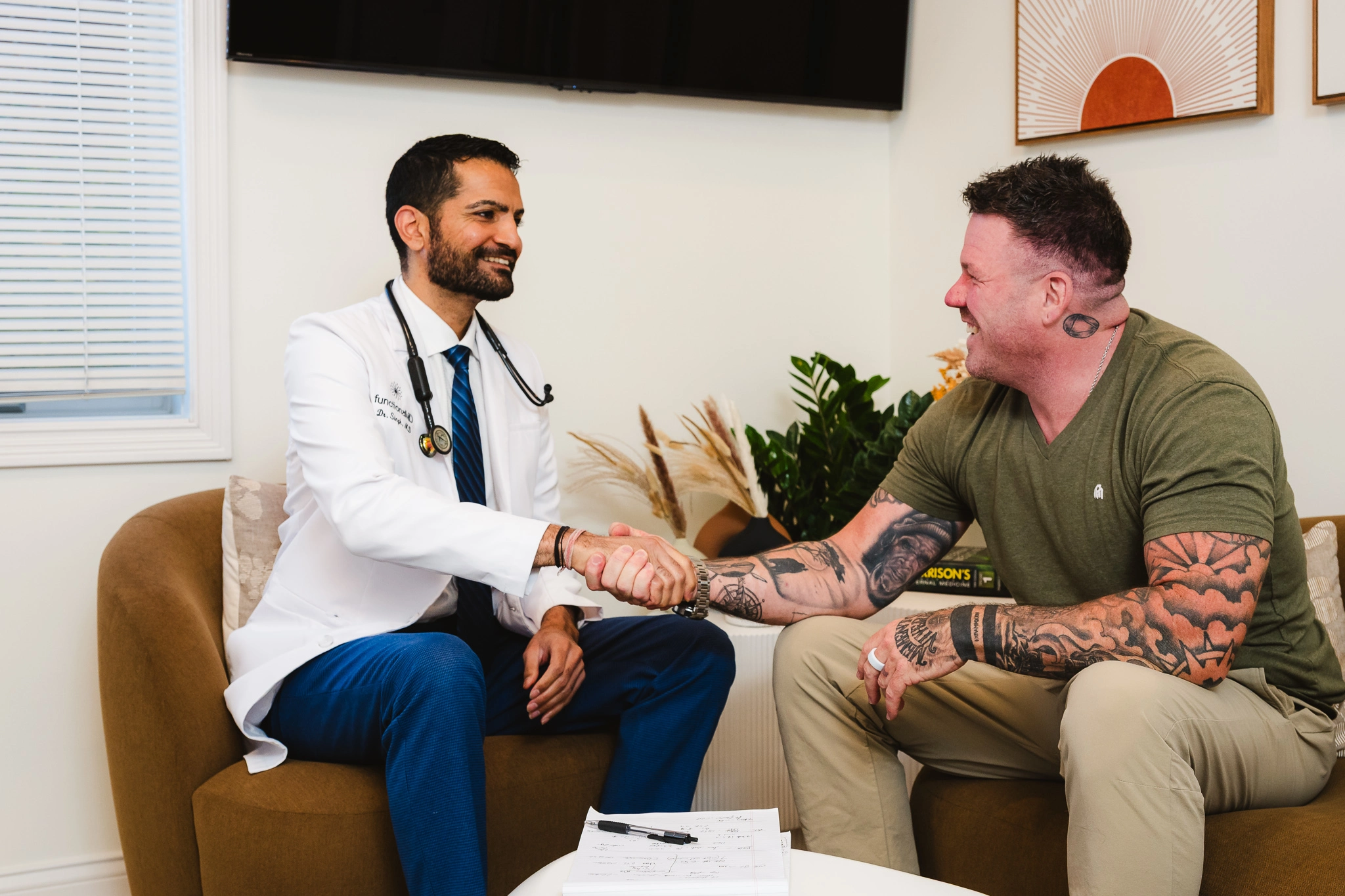
Our team brings a wealth of expertise in functional medicine, specializing in uncovering and addressing the underlying factors contributing to health issues.
With a focus on personalized wellness plans, informed by extensive training and experience, our is dedicated to guiding patients towards sustainable health and vitality.
We’re a team of health fanatics🧠💪, brought together by one mission; Human Well-Being.
The Functional MDs
The contents of this website, such as text, graphics, images, and other material contained on this website (“Content”) are for informational purposes only. The Content is not intended to be a substitute for professional medical advice, diagnosis, or treatment. Always seek the advice of your physician or other qualified health provider with any questions you may have regarding a medical condition. Never disregard professional medical advice or delay in seeking it because of something you have read on this website. Health-related information changes frequently and, therefore, the Content on this website may be outdated, incomplete or incorrect. We do not assume any liability for the information contained or referenced within this website and make no warranties, nor express or implied representations whatsoever regarding the accuracy, completeness, timeliness, or usefulness of any information contained or referenced in this website. Results vary from patient to patient. No prescriptions or treatments will be given unless a clinical need exists based on an examination by the physician. Any review or other material that could be regarded as a testimonial or endorsement does not constitute a guarantee, warranty, or prediction regarding the outcome of any consultation. The testimonials on this website represent the anecdotal experience of individual consumers. Use of this website is subject to our Terms & Conditions and Privacy Policy.
© 2026 The Functional MDs Clinic. All rights reserved.